
The Majlis Reimagined: How Gulf Interiors Are Absorbing Milan’s Materiality Turn
For readers assessing Italian majlis interior design, the practical question is how the idea performs in a real room, not only how it photographs. Dubai Design Week ran its eleventh edition from 4 to 9 November 2025 at Dubai Design District, with more than 30 large-scale installations and Downtown Design as its anchor fair. The piece that answered Milan most directly was not a sofa. The Emirati studio AJZAL built a majlis out of Sharjah stone and camel leather. Five months later Salone del Mobile.Milano opened its 64th edition, 21 to 26 April 2026 at Rho Fiera, under the theme “A Matter of Salone”. Two fairs, one question: what is a room made of?
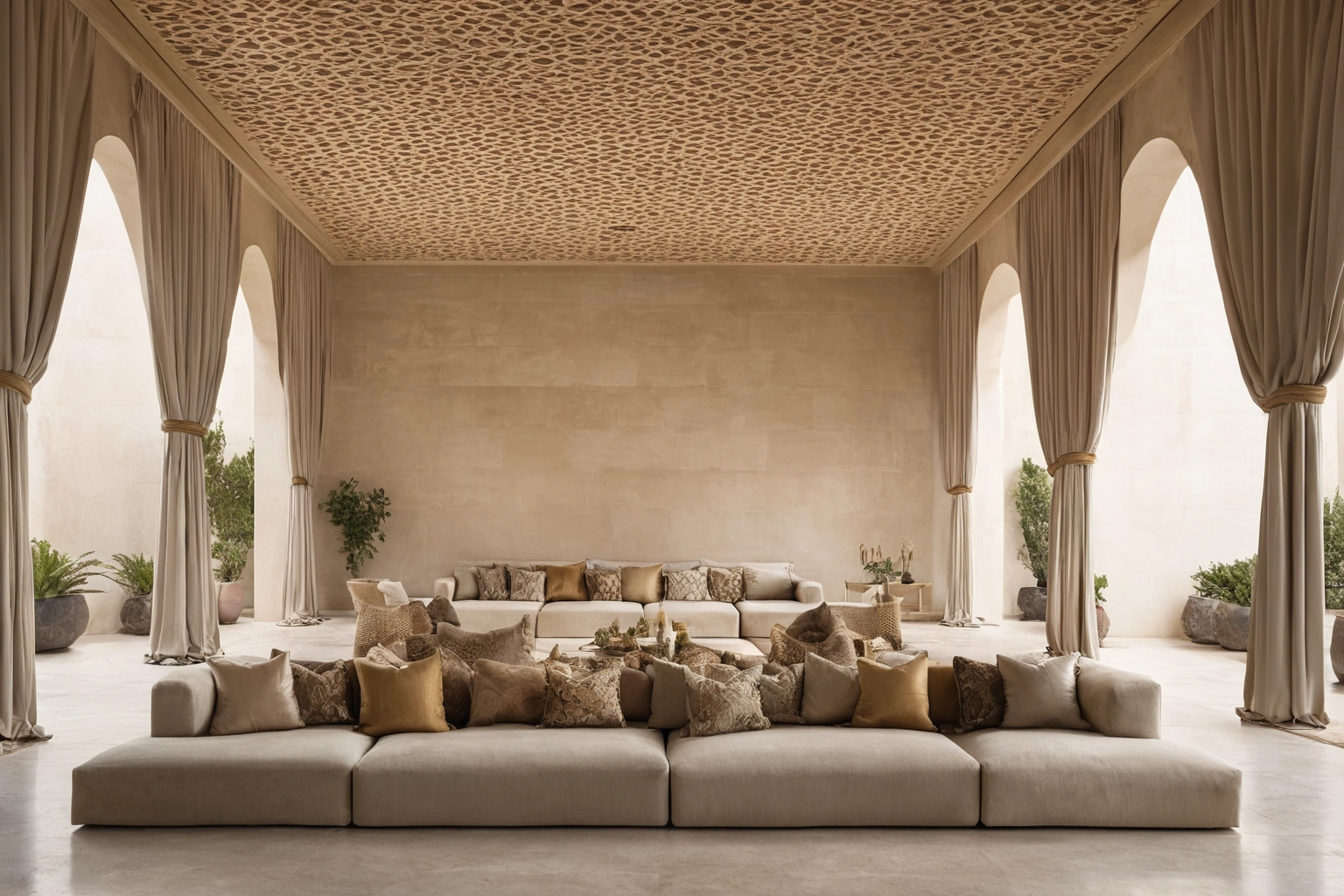
The room type Milan does not have
Majlis is Arabic for a sitting room, from the verb meaning to sit. In 2015 UNESCO inscribed Majlis, a cultural and social space on its Representative List, in a file submitted jointly by the United Arab Emirates, Saudi Arabia, Oman and Qatar. The listing is plain: a large space with carpets on the floor and cushions against the wall, usually with a stove or fire for preparing coffee. People gather to discuss local events, exchange news and receive guests. The same room resolves problems, receives condolences and holds wedding receptions, open to family, tribe and neighbourhood.
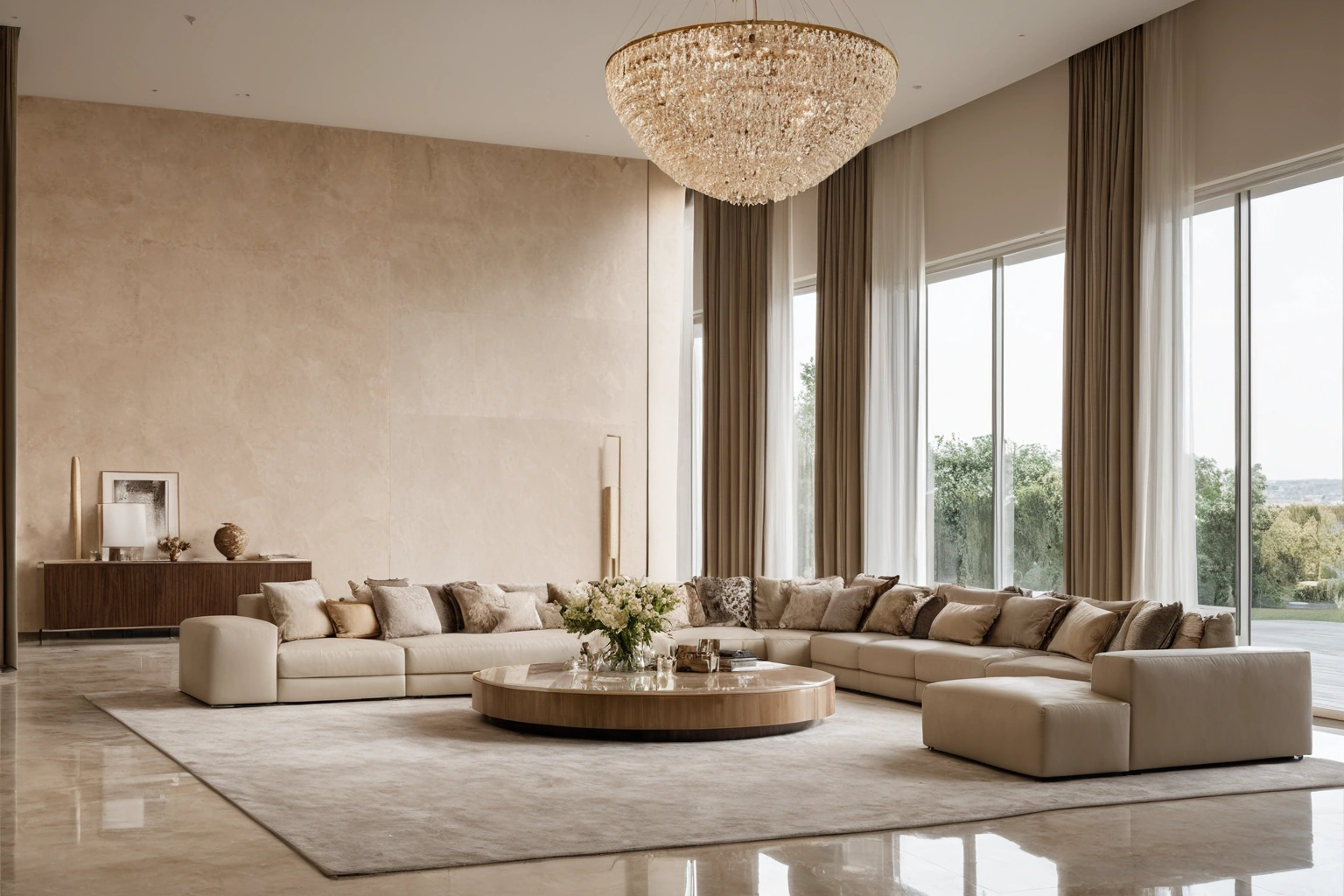
Read that as a furniture brief rather than folklore and it turns into specification. Cushions against the wall is a seating instruction: the perimeter carries the seating and the centre stays empty. That decision reorganises everything a European living room assumes. No coffee table anchors the middle, because the middle is where coffee is carried across. No sofa faces a television, because the room faces itself. Everyone sees everyone, which is what a room built for talking needs.
| Design decision | Majlis | Milanese sitting room |
|---|---|---|
| Where seating sits | Continuous, along the perimeter | Clustered islands, off the wall |
| What occupies the centre | Nothing; circulation and service | A coffee table, a rug, a focal object |
| Sightlines | One circle, everyone visible | Sub-groups facing each other |
| Capacity | Elastic; add cushions along the run | Fixed by the seats bought |
| Specified first | The run of seating and the floor | The sofa |
The mismatch matters commercially. Intesa Sanpaolo’s 2026 analysis of the Made in Italy furniture sector put Italian exports down 1.2 percent in 2025, with growth to the United Arab Emirates of 2 percent. The catalogue travels. The floor plan does not. A related practical reference is available in Top 10 European Interior Design Companies in Dubai: Setting the Standard for Luxury Living.
An Italian sofa can enter a majlis. An Italian living room cannot, because the majlis is not a living room with different cushions; it is a different set of instructions about where people sit and who they face.
What Milan is actually selling in 2026
The 2026 Salone theme is a deliberate pun: matter means physical substance and also what counts. The fair’s framing pushes toward circular and systemic design, in which materials, processes and supply chains become part of the project rather than a footnote. The argument underneath is that material should be legible: you should see what a thing is made of, and that fact should carry the design.
That argument is not new in the Gulf. A room of carpets, cushions, stone and wood was always one you could read with your hands. What is new is Milan’s arrival at it. This decision can also be compared with the site’s guide to Incorporating Middle Eastern Design into Modern Homes.
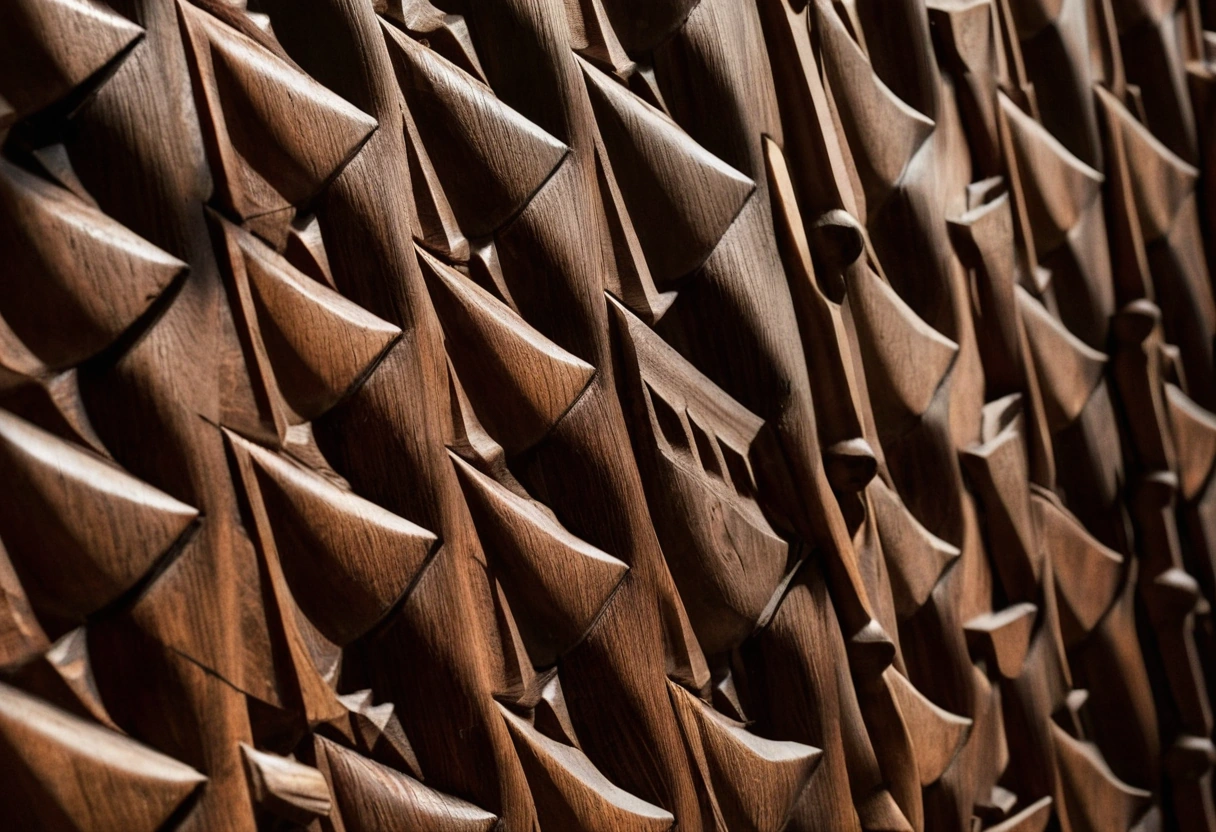
Two things the Gulf supplies that Milan cannot
The first is light, and the amount of it. Dubai in July averages a maximum near 41 degrees with a UV index around 10 to 11 and roughly eleven and a half hours of sun a day. A palette resolved under grey Lombard light behaves differently there. Gloss becomes glare; pale stone reads bright, not calm. The regional answer is old and specific: the mashrabiya, a projecting window enclosed in carved wood latticework, gives shade while letting street air through. From inside you see the street; from the street you do not see in.
The second is geometry with rules behind it. Islamic geometric patterns are constructed on grids requiring only ruler and compass, resolved into strapwork with six, eight, ten and twelve-pointed stars. In girih the visible pattern deliberately does not coincide with the construction lines beneath it. This is not motif but a construction method, which is why a screen drawn by someone who understands it looks resolved while a copy of its output looks like wallpaper.
Absorbing, not copying
AJZAL’s Woven Conversations is the clearest recent worked example. It reimagined the modern Emirati majlis through named pieces: a Mangrove Bench, a Sadu Facade, Da’an Stools, Ghaf Lighting. The materials were solid wood, camel leather, handwoven Sadu textiles, ceramic clay, sculpted glass and locally sourced stone. The studio framed heritage as a living source rather than a static memory. The ghaf, the UAE’s national tree, is what people historically gathered under to talk, which makes lighting named after it a joke with a point. The wider project context is available from dpam.ae.
Sadu is worth knowing by name. UNESCO listed Al Sadu, traditional weaving skills in the United Arab Emirates in 2011: weaving by Bedouin women, its know-how held by a shrinking number of older weavers who work in small groups, exchanging news while they spin. A Sadu textile is a geometric pattern produced by exactly the social arrangement the majlis is built for.
At the same week, #MAJLIS by Boo Design Studio with the artist Maryam Al-Homaid rebuilt the gathering space in glass and metal with etched Arabic calligraphy. Both projects keep the room’s logic and change its material. Neither produces an Italian room, nor a museum piece. Further related coverage is collected in Articles.
- Majlis
- A sitting room for receiving and gathering; carpets, perimeter cushions, coffee. Plural majalis.
- Sadu
- Bedouin weaving of the UAE and wider Gulf, geometric, traditionally by women; on UNESCO’s lists since 2011.
- Mashrabiya
- A projecting oriel window screened in carved wood lattice; shade, ventilation and privacy in one device.
- Girih
- Interlaced strapwork built from a small set of polygons, its pattern offset from the grid that generates it.
- Dallah
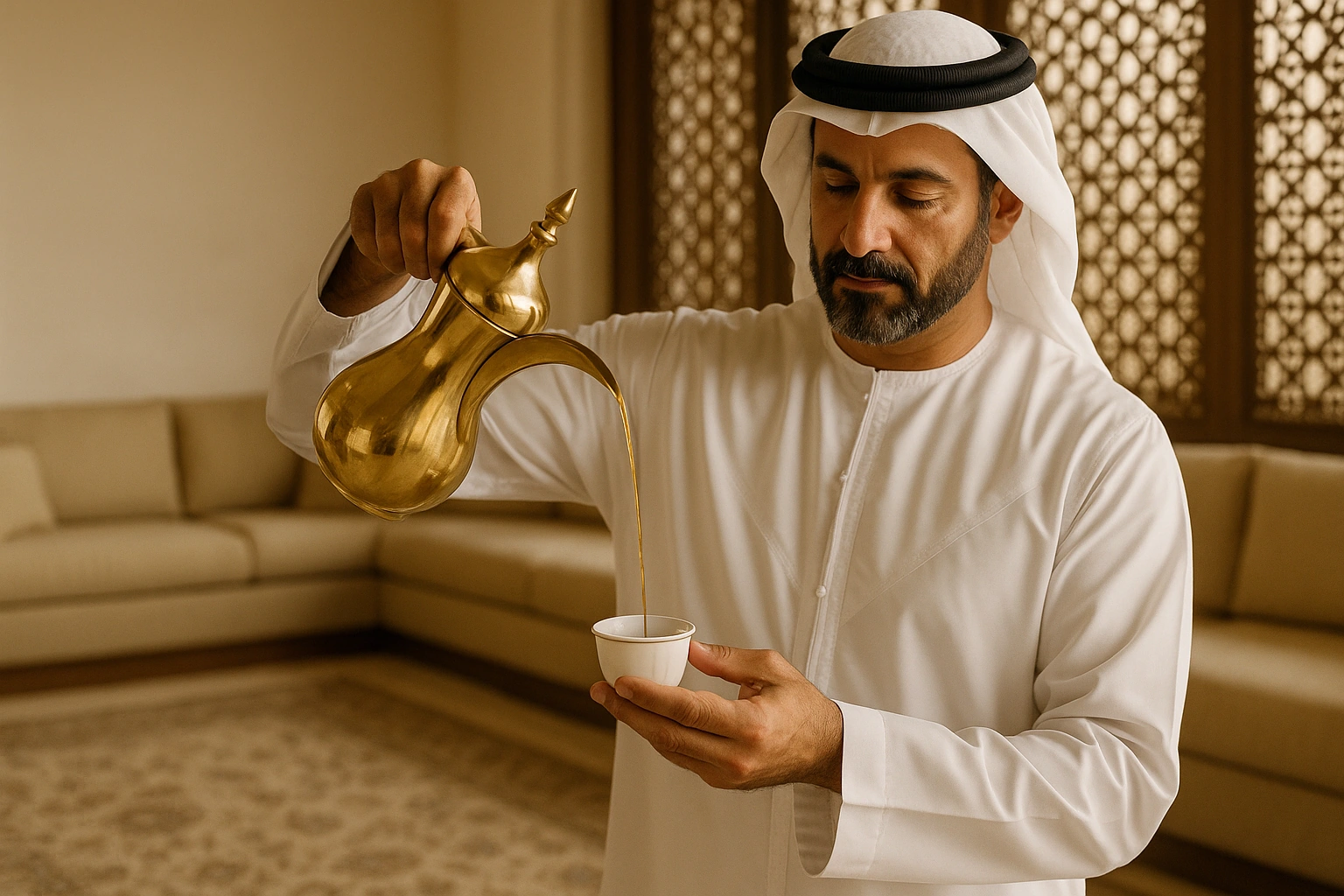
- The long-spouted pot for Arabic coffee, which UNESCO records as a symbol of generosity; poured with the right hand, guests and elders first.
Commissioning a majlis that survives the trend
The failure mode is predictable. A client sees a Milan interior, likes the materials and asks for it in Dubai; the result reads as an Italian showroom with the seating pushed back to the walls. A workshop capable of bespoke majlis and living-room interiors should argue the room type before it quotes on upholstery.
- Specify the perimeter first. The continuous run and its depth set the room; the individual seat is a consequence.
- Keep the centre empty. Anything placed there must earn its interruption of the sightline.
- Buy the material, not the silhouette. Take the stone, timber, leather and joinery standard; leave the floor plan at home.
- Design for the elastic guest list. The room should absorb a doubled headcount without furniture dragged in.
- Solve the light before the palette. Screens and matte surfaces first; colour decided under local sun.
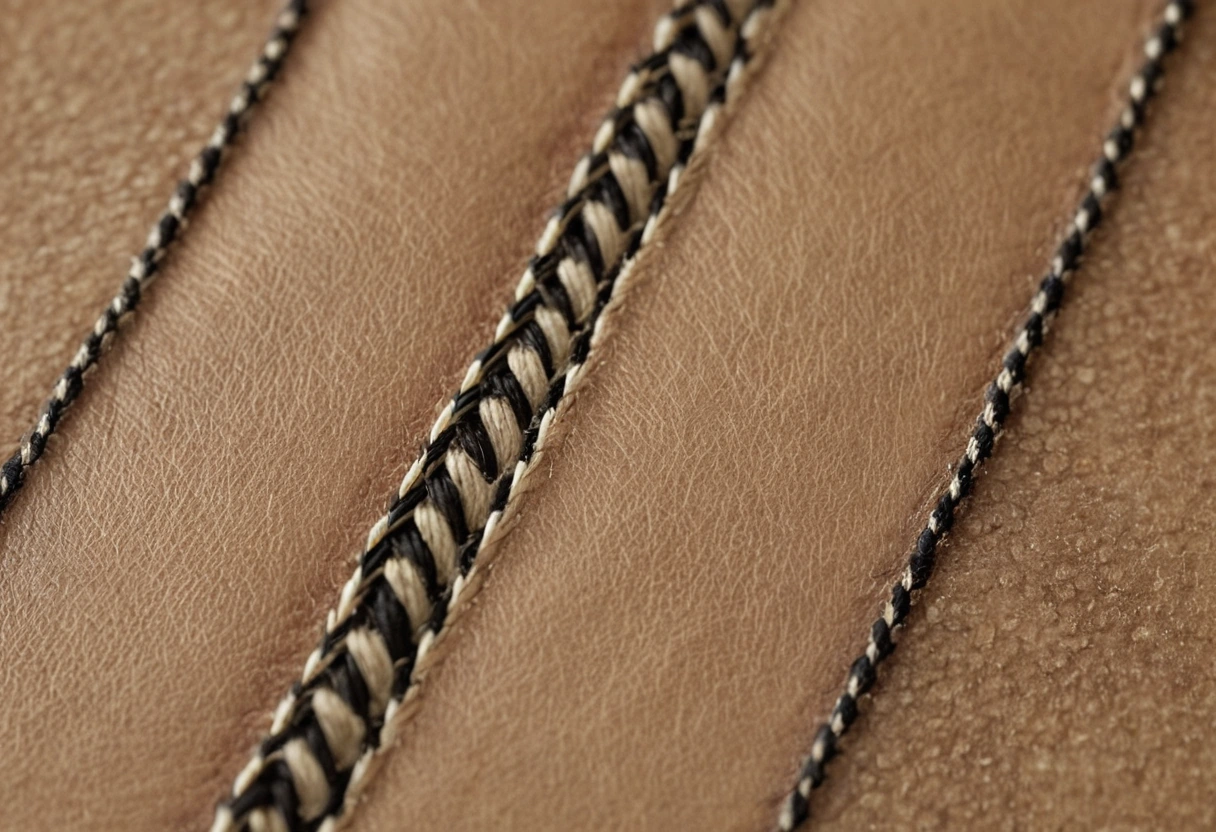
The temptation is to call this fusion, which flatters everybody and explains nothing. What is happening is narrower. Milan spent 2026 arguing that material should be legible. Gulf interiors already had a room built on legible material, and now have the buying power to hold the other side of that conversation. AJZAL answered a stone-and-leather brief with Sharjah stone and camel leather: not a copy of Milan, not a rejection of it. It is the same argument, made with what is nearby, in a room whose seating was decided long ago and does not need revising.